
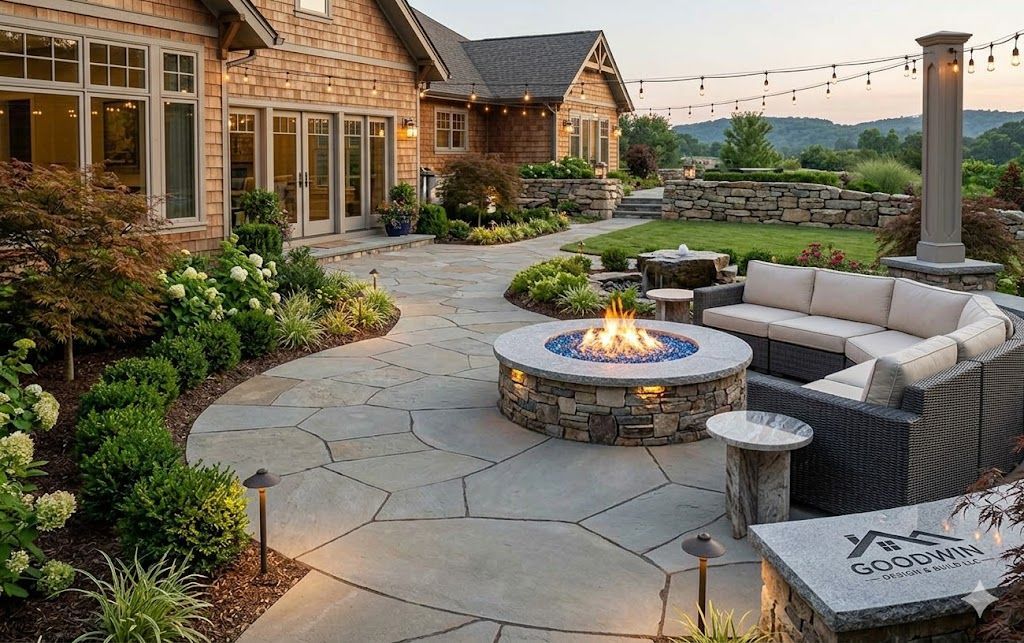
Patios Designed to Drain and Endure
Patio Design & Installation in Hoover for yards with poor drainage or no hardscaped areas for outdoor furniture
Alabama's heavy spring rains and summer thunderstorms create persistent drainage challenges in yards without graded surfaces, leaving muddy patches where grass won't grow and standing water that attracts mosquitoes. Goodwin Design & Build LLC installs patios using concrete, pavers, or natural stone, each selected based on the site's slope, soil composition, and intended use. Drainage planning during design prevents water from pooling against the home's foundation or collecting in low spots where furniture would otherwise sit, and decorative finishes create visual interest without compromising the surface's ability to shed water quickly.
Installation begins with excavation to remove topsoil and organic material, followed by a compacted gravel base that supports the patio surface and channels water toward planned drainage routes. Concrete patios are poured with a slight slope away from the house, while pavers rest on a sand bed that allows individual units to be lifted and releveled if settling occurs. Natural stone installations require careful selection of flat pieces and tight fitting to minimize trip hazards at uneven joints.
Schedule a property evaluation to identify current drainage patterns and determine which patio material suits your yard's slope and soil conditions.
What Durable Patio Construction Involves
Base preparation determines long-term performance—insufficient compaction allows the patio to settle unevenly, creating low spots that trap water and cause pavers or concrete to crack under freeze-thaw cycles. Borders define the patio edge and prevent base material from migrating into surrounding landscaping, with options including metal edging for pavers or poured concrete curbs. Fire pit integration requires non-combustible materials like stone or concrete within the heating zone and adequate clearance from seating areas to prevent accidental contact with hot surfaces.
Once installation completes, the patio surface remains level without sinking or shifting, water runs off toward yard edges rather than pooling in the center, and seams between pavers or stone pieces stay tight without weed growth. Decorative patterns such as running bond or circular layouts add visual structure, while borders in contrasting colors frame the space and define transitions to grass or garden beds. Outdoor seating areas remain dry after rain because the slope directs runoff away from furniture zones, and the surface resists staining from spilled food or beverages.
Durable construction built for seasonal weather includes joints between concrete sections that accommodate expansion during heat without cracking, and paver installations with polymeric sand that resists washout during heavy rain. These details extend the patio's functional life and reduce the need for repairs or releveling in the years following installation.
Patio installation in Hoover often involves questions about material durability, drainage solutions, and how different design choices affect long-term performance.
Common Questions About This Service
What patio material handles Hoover's seasonal weather best?
Concrete resists cracking when properly reinforced and sloped for drainage, pavers allow individual replacement if damage occurs, and natural stone withstands freeze-thaw cycles but may develop uneven surfaces as the base settles over time.
How is drainage planned to prevent water from pooling?
The patio surface is graded with a minimum slope away from the house, and the gravel base directs subsurface water toward yard edges or drainage channels that carry it away from the patio footprint.
When should I choose pavers instead of poured concrete?
Pavers offer flexibility for future changes and easier repair of isolated damage, while concrete provides a seamless surface and typically lower material costs for large areas.
What design patterns work well for rectangular patio spaces?
Running bond, herringbone, and stacked layouts create visual movement and accommodate straight or angled borders, with each pattern requiring different cutting precision at edges and corners.
How does base compaction affect the patio's long-term stability?
Proper compaction prevents settling that creates low spots where water collects and causes the surface to shift, while inadequate compaction leads to uneven surfaces and premature cracking or separation of pavers.
Goodwin Design & Build LLC evaluates your yard's drainage flow and soil type before recommending patio materials, ensuring the installation performs reliably through seasonal rain and temperature changes. Arrange an on-site consultation to review layout options and discuss how fire pits or seating areas can be integrated into the design.