
Systems That Stop Water Before Damage Starts
Drainage Solutions & Water Management in Hoover for properties with flooding, erosion, or standing water problems
Goodwin Design & Build LLC installs French drains, grades yards, and redirects water away from homes in Hoover when foundation moisture, pooling water, or soil erosion threaten property stability. The work addresses how water moves across your property during heavy Alabama rainfall, creating pathways that protect foundations, landscaping, and crawl spaces from saturation. Once the drainage system is functional, water visibly flows away from the structure instead of collecting near walls or in low spots.
The service involves inspecting how runoff currently behaves on your land, identifying where water accumulates or flows toward the foundation, and then installing trenches filled with gravel and perforated pipe that intercept and redirect that flow. Yard grading physically reshapes soil elevation so gravity moves water toward designed exit points rather than low areas near your home.
Schedule a property evaluation to identify specific drainage concerns and determine where intervention will prevent future water intrusion.
What Proper Water Redirection Requires
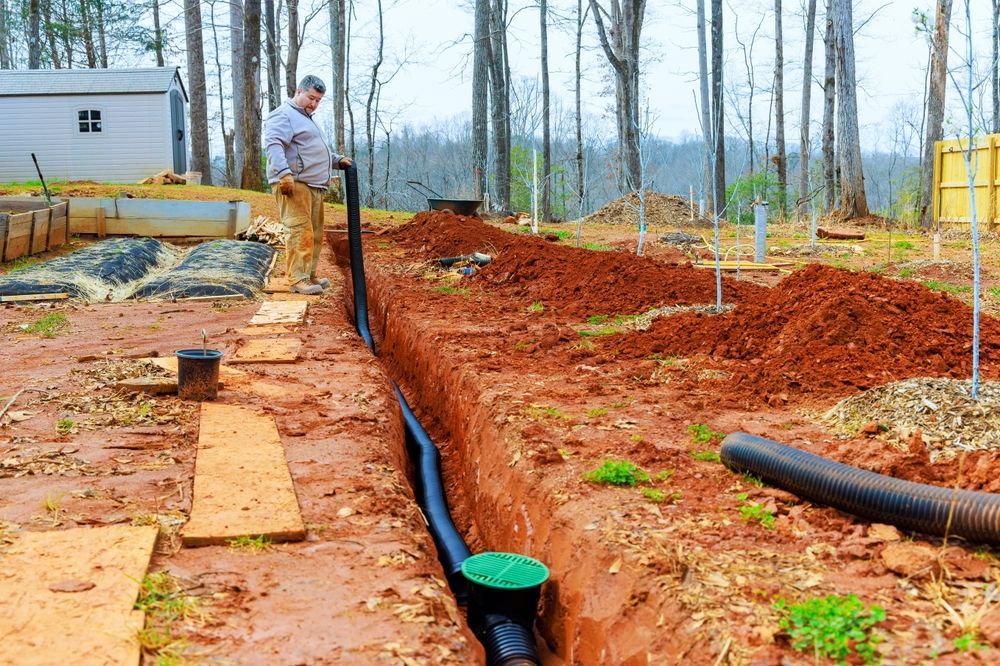
French drain installation begins with mapping underground utility locations and then digging trenches along the path where water naturally travels or needs to be intercepted. The trench receives a layer of gravel, perforated drainage pipe positioned at a calculated slope, and additional gravel before being covered with soil or fabric to prevent sediment clogging.
After Goodwin Design & Build LLC completes the installation, you notice that areas previously wet for days after storms remain dry within hours, foundation walls no longer show moisture staining, and soil erosion stops along slopes where runoff once carved channels. Downspout extensions carry roof water dozens of feet away from the building perimeter instead of dumping it directly beside the foundation.
Sump pump systems become necessary when water collects below grade in basements or crawl spaces, requiring mechanical removal rather than passive drainage. Gutter extensions and yard grading often work together, with surface shaping handling sheet flow while underground drains manage concentrated runoff from roof systems and hardscaping.
Property owners in Hoover typically ask about how drainage systems adapt to local clay soil conditions and seasonal rainfall patterns before committing to installation work.
Questions Before Starting Your Project
What causes standing water to persist in certain areas of a yard?
Clay-heavy Alabama soil prevents water from percolating downward quickly, so runoff collects in low spots or compacted areas where the ground cannot absorb moisture at the rate rainfall delivers it.
How does French drain installation prevent the system from clogging over time?
The perforated pipe sits surrounded by gravel that filters out soil particles, and fabric wrapping prevents sediment migration into the stone layer, maintaining open channels for water movement even after years of operation.
When should yard grading be combined with underground drainage?
Grading handles surface water by creating slopes that direct sheet flow away from structures, while French drains manage subsurface water or concentrated flows that grading alone cannot redirect effectively.
Why do downspout extensions matter if gutters already carry water off the roof?
Gutters collect roof runoff, but without extensions, that concentrated volume discharges directly beside the foundation where it saturates soil and creates hydrostatic pressure against basement or crawl space walls.
What indicates that a sump pump will be necessary instead of passive drainage?
Basements or crawl spaces located below the surrounding grade cannot rely on gravity to move water away, requiring mechanical pumping to lift collected water up and out to a discharge point away from the structure.
Goodwin Design & Build LLC conducts property inspections that map water flow patterns and soil conditions before recommending specific drainage solutions. Request an on-site consultation to review how water currently behaves on your property and where intervention will prevent future flooding or erosion damage.